
Evaluating and Sourcing the Right Executive Office Desk
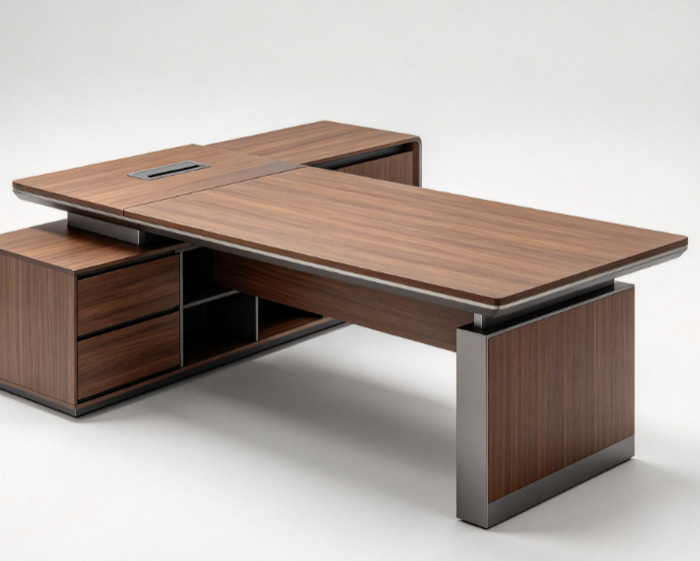
Table of Contents1. Core Functions of the Workspace2. Material Selection: Solid Wood Executive Desk vs. Composites3. Space and Layout: The L-Shaped Management Desk4. Integrated Sol
Table of Contents
1. Core Functions of the Workspace
2. Material Selection: Solid Wood Executive Desk vs. Composites
3. Space and Layout: The L-Shaped Management Desk
4. Integrated Solutions: Executive Desk with Storage
5. Commercial Desk Dimensions and Standard Sizing
6. Market Data: The Demand for the Ergonomic Executive Workstation
7. CEO Desk Design in Modern Luxury Office Furniture
8. Shipping and Assembly Considerations
A poorly chosen executive office desk causes daily workflow friction. It also causes physical strain. Buyers often forget to check space constraints when they source office furniture. They also ignore material durability. The main purpose of an executive desk is high functional output. You need a workstation that supports daily tasks. It must hold heavy computer equipment. It also needs to facilitate face-to-face meetings. We will look at exact dimensions, materials, and structural layouts below.
Core Functions of the Workspace
Functionality is the main thing. A desk must give you enough surface area. And it needs a high weight capacity. Managers deal with a lot of hardware.
You usually have a laptop, two big monitors, and a desk phone. You also have physical paper documents. The desk must handle all this without feeling crowded. A good desk makes the work easier. It does not get in the way. If the desk shakes when you type, it is a bad desk. The frame must be rigid.
Material Selection: Solid Wood Executive Desk vs. Composites
A solid wood executive desk gives you maximum structural integrity. Manufacturers often use oak, walnut, or mahogany for these. These materials resist daily wear and tear. They handle the heavy weight of metal monitor arms.
Composite materials like MDF are very common. MDF costs less money. But MDF sags over time under heavy loads. Solid wood remains completely flat. The plastic edge banding on composite boards can peel off. Solid wood edges do not peel. They can be sanded down. They can be refinished if they get scratched. For long-term corporate use, solid wood is the logical choice.
Metal frame parts are also important. The desk legs need thick steel. Thin metal wobbles. A heavy wood top requires a heavy steel base to support it.
Space and Layout: The L-Shaped Management Desk
Space utilization dictates your productivity. The L-shaped management desk gives you two distinct work zones. You place your computer hardware on the main front surface. The side return section holds paperwork. It can also hold a secondary device like a tablet or a small printer.
This setup prevents desktop clutter. A clean surface improves focus. The L-shape also fits very well in corner spaces. It maximizes floor area in smaller management offices. You can turn your office chair easily. You reach everything without standing up.
Integrated Solutions: Executive Desk with Storage
Storage is a major buying factor. An executive desk with storage keeps sensitive paper documents hidden. It keeps the top surface clear.
You should look for integrated lateral file drawers. These hold standard and legal-size papers. The drawers need heavy-duty steel ball-bearing glides. Cheap plastic glides break under the weight of thick paper files.
Cable management is another form of storage. The desk must have grommet holes on top. It needs metal trays under the surface. These trays hide thick power cables. They hide monitor wires and power strips. This prevents a messy look. Wires hanging down look very bad to visiting clients.
Commercial Desk Dimensions and Standard Sizing
Correct sizing is non-negotiable. Commercial desk dimensions follow strict ergonomic rules. Standard employee desks are too small for executive needs.
Here is a data comparison between standard desks and executive desk sizing:
Dimension Area | Standard Employee Workstation | Premium Executive Office Desk |
Overall Width | 48 - 60 inches | 72 - 84+ inches |
Surface Depth | 24 - 30 inches | 36 - 48 inches |
Clearance Height | 29 - 30 inches | 29 - 30 inches (or height-adjustable) |
Leg Room Width | 24 - 30 inches | 36 - 42 inches |
Storage Capacity | Minimal / Small Mobile Pedestal | Integrated side credenzas, double pedestals |
Executive dimensions offer deeper work surfaces. This extra distance reduces eye strain. Large monitors sit further back from your face. The wider surface allows meetings. You can place two chairs on the other side. Your guests will have enough legroom.
Market Data: The Demand for the Ergonomic Executive Workstation
Corporate purchasing behavior shows a clear pattern now. Companies buy a lot more ergonomic furniture. They spend money to protect user health and joints. Data from industry reports highlights this market expansion.
The U.S. office furniture market was valued at USD 17.43 billion in 2025. Projections show it will reach USD 25.82 billion by the year 2033. The Compound Annual Growth Rate (CAGR) is 5.1%.
This growth links directly to the ergonomic executive workstation. Sit-stand lifting mechanisms are replacing fixed-height bases. Dual-motor electric frames are very popular. They lift heavy wooden tops smoothly. Proper posture reduces back pain. It reduces employee sick days. Buyers care about this data.
CEO Desk Design in Modern Luxury Office Furniture
Visual impact matters a lot for client-facing spaces. CEO desk design sets the tone for the entire room. First impressions count.
Modern luxury office furniture does not use heavy, blocky shapes anymore. Old designs looked like big wooden boxes. Current designs use very clean lines. They mix natural wood and industrial steel together. You see thinner desktop profiles. But they use hidden steel support bars underneath to keep it strong.
The focus is on unbranded, high-quality finishes. The design communicates stability. It is direct and professional. The craftsmanship speaks for itself. The desk does not need flashy design elements. A matte finish looks much better than a high-gloss finish. It does not show dirty fingerprints. It absorbs light instead of reflecting glare into your eyes.
Shipping and Assembly Considerations
Buying the desk is only the first step. Shipping large commercial furniture is difficult. A solid wood executive desk is very heavy. It often ships in multiple flat boxes. Sometimes it ships fully assembled on a large wooden pallet.
You must check the door width of your office building. A large CEO desk might not fit through a standard door frame. Measure your freight elevator too.
Assembly requires proper tools. You usually need an electric drill. Do not use a manual screwdriver. The steel brackets require tight screws. If the screws are loose, the desk will shake. Heavy wood panels require two people to lift. Do not try to assemble it alone. It is easy to drop it and damage the wood edges during setup.
Industry FAQ
Q: What is the standard depth of an executive desk?
A: The standard depth ranges from 36 to 48 inches. This is deeper than regular employee desks. The extra depth accommodates larger monitors and leaves room for client meetings on the other side.
Q: Why are solid wood desks better than MDF?
A: Solid wood provides a much higher weight capacity. It does not sag over time. It can also be sanded and refinished if the surface gets scratched. MDF edges often peel after a few years.
Q: Do I need an L-shaped desk?
A: It depends on your daily hardware. If you use multiple monitors and also need physical space for reviewing paper documents, the L-shape is good. It separates computer tasks from paperwork tasks efficiently.
Q: How wide should the legroom be?
A: You want at least 36 to 42 inches of legroom width. This allows you to roll your chair side to side without hitting the drawer pedestals.
Interested in Learning More?
Contact our team to discuss how we can help with your furniture needs.
Get in Touch